As a part of our continuing series of exclusive interviews, we recently spoke to electronic pioneer and
. Daniel’s first single as
, revolutionised electronic music with its punk aesthetic, stark sound, and dark subject matter and was the first release on the Mute label. His next project was another radical endeavour:
, a virtual pop group who did not do interviews and whose first and only LP comprised 50s and 60s rock n roll standards covered in upbeat synth pop style.
As head of the record label he created he signed and produced some of electronic music’s most influential groups including
joining the roster following Vince Clarke’s split from D-Mode. He also had a hand in both the Acid House explosion of ‘87/88 with his
. In the course of the interview we discuss the making of the seminal
As an accompaniment to the interview, we have a Spotify playlist that reflects the breadth of Daniel Miller’s work as an artist, producer, remixer and label head over the past 3 and a bit decades. Have a listen
here.
Interview:
Hi Daniel
-Hi
Can we start by talking about your earliest musical memories?
- What? Ever?
Yes, what you were listening to when you were growing up and then when you started to make music …?
- Ok. Well, when I was a real kid, you know 10 or something, according to my parents I was always obsessed with my music, from even before I can remember. So I used to listen to nursery rhymes, 78 [rpm] versions of nursery rhymes, I just wanted to hear it over and over again. So that’s my earliest memories. I grew up in the 60s, really. So, when the Beatles came out I was 11 or something like that so I grew up with all that music. The Beatles, the Stones, that whole kind of British R & B thing. I used to spend yonks exploring Blues, black American Blues, and the British white Blues – Fleetwood Mac, Canned Heat, the American band, were great and I saw a lot of those gigs. I loved the Beach Boys – I loved the contemporary pop of the day, really. Y’know – the bands. Pretty much everybody, including me was in some kind of band at school. I was playing guitar and I was really bad … I was in the worst band in our class. But, there was a guy in our class Paul Kosoff who was [later on] the guitarist of Free. Don’t know if you’re familiar with him?
Yeah, definitely …
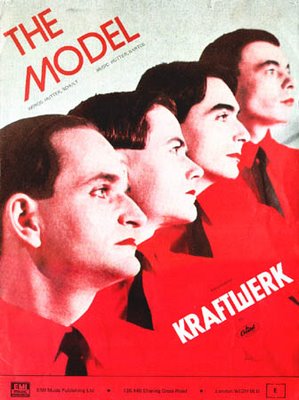
- He actually was in my class at school and he was a friend of mine. He was a genius guitar player and he tried to teach me to play but I knew I didn’t have a hope. But I did enjoy being in bands. Then towards the end of the 60s, I started to get more into experimental music. The music had gone kind quite hard rock at that time, a lot of singer-songwriters … between 63 and 68 it was incredible how much it [music] had progressed and then for me it had slowed down a bit and I wanted to hear new things that’s why I started to listen to some of the up-and –coming German bands at the time like Can And Amon Duul and getting into more electronic music. I was listening to Steve Reich and Phillip Glass . Y’know getting into more experimental things, Terry Riley … And that led me into other fields really and I became sort of obsessed by German music . I was going to the Virgin Records shop at that time . I was at college at the time and I’d just started to work in the West End above the Shellys Shoes shop in Oxford Street and there was a guy there who was in charge of all the imports and I befriended him a bit and he was always tipping me off to new German stuff that was coming in. And that became a bit of an obsession – bands like Faust , Neu!, Kraftwerk that was very much what I was listening to and I kind of gave up on anglo-american music – there were some exceptions but that was what I was listening to at the time.
What made you decide to make the leap into making electronic music?
- I’d always been making music as a frustrated musician in school bands and then a little bit when I was at college. I was at college from 69 to 72 and I did film and TV and there was a little studio there as part of the film studio and it had 3 stereo tape recorders there and me and a couple of others started to mess around with tape loops and experimenting a bit with tape manipulation – basic musique concrète-y things, loop-y Steve Reich kind of things… I really wanted to get into electronic music making but it was very frustrating because electronic music instruments at that time were hugely expensive and something I could never think about owning or using. So, it was a bit of a distant dream really. But then punk happened a few years later, well a few things happened – punk happened and cheaper synthesisers started to come out. Relatively more affordable synthesisers – the big old Moogs , ARPs and stuff . Punk kind of re-ignited my interest in music. The fact that there was cheaper recording equipment and cheaper synths around - just the whole thing came together . I thought if I’m going to do something this seemed to be a good time. That’s why I bought the second hand synth and I bought a tape recorder. I started to mess about in my bedroom making electronic music of some sort or other.
You then went on to make single as the Normal, 1978’s Warm Leatherette [which appears on Elektro Diskow] which was a hugely influential record on several scenes. Can you tell us a bit about the making of the record and the initial reaction to it?
- As most people know the lyrics were based on a JG Ballard book called by Crash which I was very influenced and inspired by when it came out a few years before. I was kind of obsessed by it a bit, and an old college friend and I tried to write a film script for it so I knew the book inside out. There were lots of issues about the film script, who owned it … but we were doing it more as a hobby but it was an interesting film script. I didn’t want to throw all of that away so I thought I’d try and write a song encapsulating it in a 2 and a half minute song as a challenge more than anything else from a lyrical point of view. And then from a musical point of view, I really felt that, this was, like , 1977, when I started to make electronic music and I thought that it (electronic music) was much more punk rock than punk rock was. Punk rock was very much still rooted in the past, I mean I loved a lot of it but it was R&B really and I thought that to really take that idea of accessibility and DIY forward there had to be another way. You shouldn’t have to learn three chords and I just thought, apart from my love of electronic music I actually thought it was the next step on and I wanted to make a record that reflected that.
I think a lot of people thought, people in Sheffield in particular, they thought that [electronic music] was the most punk thing they could do …
- Yeah, exactly, I mean Punk – playing one note is much more punk than playing three chords let’s face it.
So, in terms of chronology, which came first the record [Warm Leatherette] or the record label [Mute!] ? How did you set Mute up?
- Well, I didn’t start a record label, I just wanted to put the single out. I was very keen on doing everything myself. There were a few people who were doing that at the time. There was quite a lot of documentation about how to put out a record. I was just really keen to do it myself. I didn’t really want to talk to any record companies. I didn’t know any record companies to talk to even. I had nothing to do with the business at all. So I wanted to do it completely outside of the business. So I just put it out really. I made some test pressings and I went to a few of the independent shops like Small Wonder, Lightning (who were a distribution company at the time) and I went to the Rough Trade shop. I didn’t know the people there at all but they really liked the single and they played it and they were the second people in the world to hear it and they fucking played it in the shop which was really embarrassing. So they were playing the record in the shop while all these people were listening – I wished the ground would swallow me up and all those kind of expressions. Anyway, they liked the single and asked if they could distribute it and I said, ‘sure, why not’ and that’s kind of how it happened. But the label … it still wasn’t a label it was just a single I put out but the single did much better than I expected – I thought nobody would like it and I thought it would just disappear and I would carry on doing something else, y’know but actually people seemed to quite like it. I enjoyed the experience of people liking it, I enjoyed doing a bit of promotion for it and taking it around the papers or whatever so I started to get into the process. People did start sending me demos because it had my address on the back of the sleeve even though I wasn’t a record company. and then I did a bit of live work with another guy who had made a single, a guy called Robert Rental and we became friends. I didn’t know anybody making music of that kind when I put the record out but through putting the record out obviously I met a lot of people - like Robert Rental, Thomas Leer, Throbbing Gristle, Cabaret Voltaire – all those kind of people. There wasn’t really a community but all of a sudden there was a little network. All those people doing the same kind of gigs. And then a friend played me some demos of Fad Gadget and that was the first thing I thought, ‘I can really relate to that musically and lyrically that’s something I’d really like to work with’ and then I met Frank – Tovey who was Fad Gadget and we got on so I decided to put his single out and that was really the beginning of Mute as a label, working with other artists.
That’s actually one Mute artist I’d like to talk about [Fad Gadget]. He’s often overlooked in the histories of this period but he made amazing records – we have 2 of his tracks on Elektro Diskow. What was he like to work with and what do you think his legacy is?
- Well, firstly how was he to work with – we had a good time making the records, the first few records that I worked with him on. He was funny … we just had a lot in common in terms of sense of humour and how we saw that in relation to electronic music and he was a very warm guy and his stage persona was something very different – onstage he turned into a wild self-destructive character and offstage he was a very nice normal bloke, really. He had a very clear idea of how we wanted to do it. I had the tiniest bit more experience in the studio – I’d hardly done anything but still a bit more than him so I guided him through some of the things and we made those records. The first one of those was Back To Nature… The legacy is strange really because you’re right he did slightly get overshadowed by some of the other artists at the time but now when I’m working with some of the younger musicians, I mean teenage musicians, so many of them cite Fad Gadget as being a big influence, y’know. People like Liars for instance. Liars are one of the bands that every other band in the world likes and they say that they are huge Fad Gadget fans. They seem to be coming out of the woodwork as time goes on as people suddenly discover him and see how brilliant it was. So his legacy really does live on in that sense. He inspires people still, which is great.
Can you tell us a bit more about your Silicon Teens project [State Of Shock Pt 2 is featured on the album]? It’s quite an interesting ‘turn to the left’ – how did it come about?
- When I first got the synth and the tape recorder I kind of had a creative explosion of doing stuff with it. I did all sorts of different things and so I thought for a laugh I would try doing a Chuck Berry song on the synthesiser to see how it would come out, y’know, cos I had been a big Chuck Berry fan. I did it in about an hour and a half or something and it was one of the other things that I’d done. Then I was talking to someone at the Rough Trade shop who I’d become quite close to at that time and we were just talking about cover versions. I said , ‘I did a cover version of Memphis, Tennessee’ and they said, ‘I wouldn’t mind hearing it’. I didn’t think anything of it so I brought it in and played it to them and they said, ‘Wow! You’ve got to put that out!’ and I said ‘ What? Err, OK, yeah, maybe?!’. I didn’t want to put it out as the Normal cos it was a very different sort of thing so I made up a name, Silicon Teens as a group and then out of the blue out of that came the concept of them being the world’s first electronic teenage pop group or something like that. Some clumsy title like that. [From]My background there was the kind of that concept that, cos I was in my mid 20s and people like the Cabs [Cabaret Voltaire], Human League and Throbbing Gristle were all around the same age and we’d grown up in a different world and had developed into being electronic musicians. I thought the next kind of generation was the first where you had a choice between the guitar and a cheap synth. Up to that point if you wanted to be in a band or play pop music you were either a bassist, a guitarist or a drummer and but now it was possible to make electronic music. It was the first time that, from a purely economical point of view it was possible. You could say I would rather buy a synthesiser to a drumkit or I’d rather buy a synthesiser than an amp and a guitar. So I thought, well, out of that there’s going to be something really interesting – a whole new generation of people making music, coming fresh to electronic music. But of course that hadn’t happened yet in reality. The Silicon Teens were the first of those [electronic pop] groups, even though they weren’t really a group, if you see what I mean. They were the first group where their first instruments were synthesisers. Does that make sense?
Yes, definitely!
- We managed to perpetuate the myth for about a month and then everybody twigged it but it was fun for a bit! Then there were actually groups like that … One of those groups that actually was a teenage electronic pop group was Depeche Mode and they came along about a year and a half after that. So the prediction kind of came true in that sense.
In addition to your own music you also produced a lot of your rosters’ records including Depeche Mode’s brilliant debut Speak & Spell and Yazoo to name but two. What kind sounds were inspiring you and the artists, electronic and non-electronic around that time?
- It was very much electronic at that time and I think Kraftwerk were the real common factor, y’know. Depeche and Fad Gadget were different in their influences. Fad was a bit older, but they [both] had grown up with Kraftwerk, Human League, Cabaret Voltaire, D.A.F (who were also on Mute at that time ) … so that was their thing, that was their inspirations so we had a lot of things to draw on.
It was a fertile period, I guess?
- Yeah, it was an amazing period, actually. This whole discovery … people kind of woke up after Punk and thought there’s a whole world of music that I can invent and a whole load of people who were hungry to hear that kind of music as well. So it was an amazingly good time in that respect.
It’s funny, cos I’ve been recently watching the re-runs of Top Of The Pops on BBC4 … Can were on the other week and it was like they were beamed down from another planet but you just got this feeling that something had to happen, something had to change in music.
- Kraftwerk were around then, of course they were on Tomorrow’s World [BBC technology programme] and Autobahn was a massive record for me, that was 73, I think. So, it was all there in the firmament, you know what I mean, it was there but it was a bit out of reach. Then when we could touch it we grabbed it and made our own thing from it inspired by that.
Yazoo’s Situation is a stand out track on the comp and a record that is cited time and time again as a massive influence on House and Techno. You co-produced it. Was it consciously made for the dance floor and how did you get legendary producer, remixer and DJ François Kervorkian involved with its seminal remixes?
- I don’t think I did co-produce it, did I? Am I credited?
You’re credited on it, yeah!
- Oh Ok, well, maybe I did some sounds on it something or whatever. Eric Radcliffe and Vince [Clarke from Yazoo] really produced it but I did help out in the studio. I did work on it but I don’t want to take credit from anybody else. Well, that was a B-side, obviously [of 1982’s Only You] and like so many B sides it became the more legendary track almost. François was kind of legendary then. He was very underground legendary but hadn’t quite hit “Legend” yet. It was actually suggested by Seymour Stein who ran Sire Records, our American licensee, and he said ‘You gotta get a remix, get Francois to do it,”. Remixes weren’t part of the language at that time particularly, d‘ya know what I mean? We were very protective about what we were doing so we thought ‘Give The Multitrack to someone else to fuck around with???’, ya know? But we decided to do it and he [François] did the remix and there were certain things about the remix that we hated … the fact that it had strings on it – one of the production rules as a label as a collaboration with the artist was no way we’d ever have strings on any of our records. You’ve got to have rules, right! The remix had strings sounds on it, well not real strings a string machine. We were a bit shocked and we thought it was a bit … Vince didn’t like it but anyway we agreed to have it and it became very successful. In the end of course we became good friends with François as time went on and he mixed [Depeche Mode’s album] Violator. It was a nice continuation of that .
It opened up a new audience in New York particularly; Paradise Garage , Chicago and Detroit as well …
- It was a very important track. An important mix as well.
Many records on Mute from this time were big hits in the underground spots. Ron Hardy in the Muzic Box in Chicago used to play his self-made edit of Warm Leatherette and Yazoo’s Situation was a staple in Chicago, Detroit and New York. Records like Warm Leatherette, Los Ninos Del Parque by Liasons Dangereuses and also DAF - they all hit big in the clubs that would spawn New Beat, Industrial and EBM. Were you aware of the effect these records were having on these different scenes and did that feedback into the music you and your artists were making?
- Up to a point. Yazoo played at the Paradise Garage which was very much the home of that kind of music. Not that kind of music but the music in New York. That was really interesting because that was kind of outside my field of experience and knowledge. I went to the show with the band and it went down so well and it really taught me a lot about how our music could spread into other genres in a way. Of course, we were getting quite a lot of feedback from people and then when Techno came along it was very clear from what Techno musicians were saying that these records had been big influences.
Were you a clubber? Did you have any favourite DJs? Was DJing something you ever did as a consequence?
- I was never a clubber in the true sense of it. I wasn’t really into the whole Blitz [electro/New Romantic club night of the early 80s] at all when that started in London. I was a DJ in the mid 70s before but I was very much a pop DJ in a holiday resort. When Techno came along I did a lot more clubbing. Especially in Germany where we were very involved with the Tresor club which is a legendary club in Berlin. We ended up being the distributor for their records so that we were quite closely linked and actually recently I started DJing on a regular basis in the last year or so. So it’s taken a while!
How did you view the electronic sounds that followed after the initial burst of electro (House, Techno etc)? Did they influence your production style and your artists and the artists you signed?
- Oh yeah, very much. It’s a kind of feedback loop, isn’t it? You influence people and in turn they influence you and that’s always very exciting. We were very lucky to work with Richie Hawtin/Plastikman, Speedy J, Luke Slater some of the real top Techno people through our late Novamute label. Also, we became fans of it. Not every band on the label but Depeche were fans, Martin [Gore] especially. In fact, Martin & Vince, you probably know this but they’ve just got back together for the first time in 30 years to make a Techno record together. So, it’s very much a weird feedback loop. In a great way. Vince started that project because Richie Hawtin asked him to do a Plastikman remix for his remix compilation and Vince started to listen to that music online and really got into it so I then said to Martin ‘Why don’t we make a Techno record together’. So that’s a brilliant example of that feedback thing.
Do you hear the echoes of those early electronic records and the records you made in today’s music ? Are there any contemporary electronic artists that stand out for you?
- You can definitely hear them all over the place. Whether it’s in mainstream Swedish House type music or more experimental glitchy things. Techno or Dubstep. There’s a lot of stuff in all that – and don’t know whether these kids have listened to it or not but you can hear the influence you can hear the roots of it. It all started with Kraftwerk really. Kraftwerk were the sort of Beatles [of electronic music]. So in the same way that in Oasis you can hear a lot of Beatles in that, you can hear a lot of Kraftwerk and then later Depeche … People discovered Kraftwerk after listening to Depeche. Electronic music now – there’s not that many electropop things that are that innovative at the moment. There is a lot of interesting electronic music being made now. Really interesting things. There are no artists particularly that I could cite, it’s about tracks really. I think it’s interesting what’s happening in America with their take on Dubstep. That kind of Rock/Dubstep crossover thing which is very much in the vein of what artists like D.A.F. did and Nitzer Ebb. It wasn’t Dubstep but it was like Technorock. Rock kind of dynamics in a way. So all that’s very interesting
Nitzer Ebb is quite an interesting story with the PWL [Stock Aitken & Waterman] connection …
- Yeah! The guy who managed Nitzer had a management partnership with a guy called Phil … God can’t remember his name …
Harding?
- Yes, that’s it. Phil Harding – thank you – who was an engineer in the PWL production team. So they picked up Nitzer Ebb for management and it was natural that Phil would help them make their first record. It’s funny to think that someone from PWL was involved that early-ish EBM [Electronic Body Music] sound. There were one or two other bands like Front 242 … I don’t know if it’s one of those little known facts but it’s a funny fact, anyway. Ironic. And he’s very good Phil Harding - a brilliant mixer and he produced the whole of the first album and did a brilliant job. With Nitzer Ebb, there wasn’t much of that sound around, really. They were like the younger brothers of D.A.F., Nitzer Ebb, in their sound. They hadn’t really caught on at that point and I couldn’t work out why. And then it obviously did – they started playing raves very early on, Nitzer Ebb. The whole original Balearic thing. They would do 5 gigs in Spain in one night time starting at 10 in the evening and finishing at 10 the next morning in the mid 80s which is the beginning of rave and all that sort of thing. It all connects.
They were very big on the Belgian scene which ended up being Rave and Techno and all that kind of stuff…
- Yes, but Spain was their thing. They would play 10 gigs over a weekend …
Wow!
- They would drive down that coast on that horrendous road playing all these different clubs . They had an easy set-up. It wasn’t like a band - guitar, drums etc. It was just two of them so, y’know, perfect. People were taking ecstasy and whatever and staying up all night dancing and that was like the precursor to the rave culture that started in Britain a couple of years afterwards. [Nitzer’s] Join In The Chant was a very big rave anthem in the early days.
Just to finish things off - What projects have you got lined up for 2012 at Mute? Anyone we should keep an eye out for?
- Everybody! Well, we’ve got a new album by Yeasayer, a new album by Liars. We’ve got Cold Specks' debut album out in May, and the long awaited Can box set, The Lost Tapes, out in June. We’ve got ongoing projects that we’ll be working on from Beth Jeans Houghton & The Hooves Of Destiny, S.C.U.M., Big Deal, Apparat and Martin Gore and Vince Clarke's recent collaboration VCMG. We've just started a new imprint, Liberation Technologies, a more experimental electronic imprint more in the Novamute vein. Polly Scattergood is making her second album plus Laibach are releasing the soundtrack to Iron Sky and the Introduction To.. series continues with Fad Gadget / Frank Tovey and Laibach.
There’s a lot of really interesting records. They’re all sounding great and we’re working really hard to get those finished and sounding as interesting and as good as possible.
Thanks very much, Daniel!
- Congratulations on the [Elektro Diskow] project and good luck with it!
PS. Daniel will be DJing at festivals in Europe over the summer. Confirmed dates below!
13 JULY - Shitparade festival,
Berlin